
Route 66, also known as the “Main Street of America,” is more than just a road—it’s a symbol of freedom, adventure, and the open road. Running from Chicago to Los Angeles, this historic highway has connected small towns and cities for nearly a century. Tulsa, Oklahoma, plays a central role in the lore of Route 66, offering travelers a mix of nostalgia, modern attractions, and local culture. Whether you’re a history buff, a road-tripper, or someone looking for quirky roadside stops, Tulsa is an essential part of any Route 66 adventure.
The History of Route 66 and Tulsa’s Role
Route 66 was officially established in 1926, serving as a vital corridor that connected the Midwest to the Pacific Coast. Known for its role in America’s westward expansion, Route 66 became the lifeline for thousands during the Dust Bowl and the Great Depression. It offered people a route to new opportunities, and along the way, motels, gas stations, and diners sprang up to serve weary travelers.
Tulsa’s role in Route 66’s creation is significant. Cyrus Avery, often called the “Father of Route 66,” was instrumental in ensuring that the highway passed through Tulsa. Avery, a Tulsan, was a key figure in the creation of the highway, ensuring that his hometown would become a major stop along the route. Because of his influence, Tulsa became a thriving hub for travelers, with its bustling service stations, motels, and eateries catering to those making the cross-country trek.
As Route 66 became a symbol of American freedom and the open road, Tulsa emerged as a key city along its path, rich with opportunities for road-trippers to rest and refuel. The town embraced its place on the map, and today, you can still see the remnants of that golden era in the city’s architecture, neon signs, and carefully preserved attractions.
My husband’s family is all from Tulsa, so we visit often. When we visit, we love checking out all the fun and quirky stops that are along the Route 66 corridor through Tulsa.
Tulsa’s Route 66: Then and Now
Though Route 66 was officially decommissioned in 1985, its legacy lives on in Tulsa, which has made significant efforts to preserve and revitalize its Route 66 corridor. Drive down Tulsa’s section of Route 66, and you’ll encounter beautifully restored Art Deco buildings, old-school motels, and classic neon signs that still shine brightly, beckoning travelers to stop and explore. It’s like driving back through time.
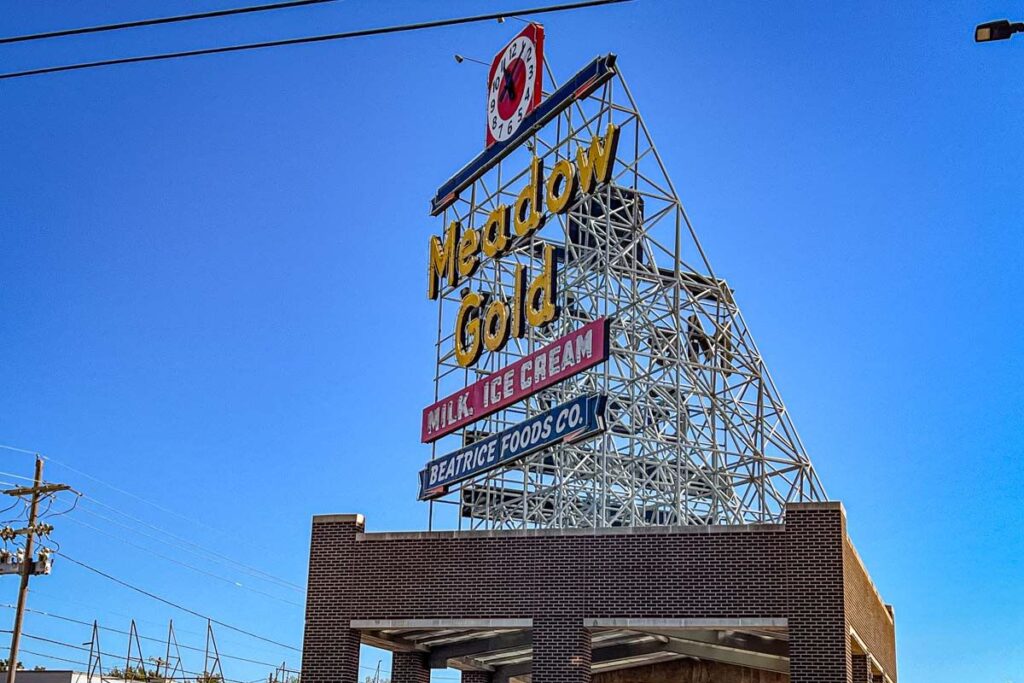
One of the most iconic reminders of Route 66’s heyday in Tulsa is the Meadow Gold Sign, a massive neon beacon that once stood atop a dairy building. This sign, restored to its former glory, serves as a reminder of the role neon advertising played in attracting the attention of road-weary travelers. It’s one of many photo-worthy spots along Tulsa’s Route 66. It’s an easy spot to get to, and if you’re pulling over there for photos, check out the Meadow Gold shops where local artisans display their wares. Say hello to the giant lumberjack, and take your turn at axe throwing right outside the front door.
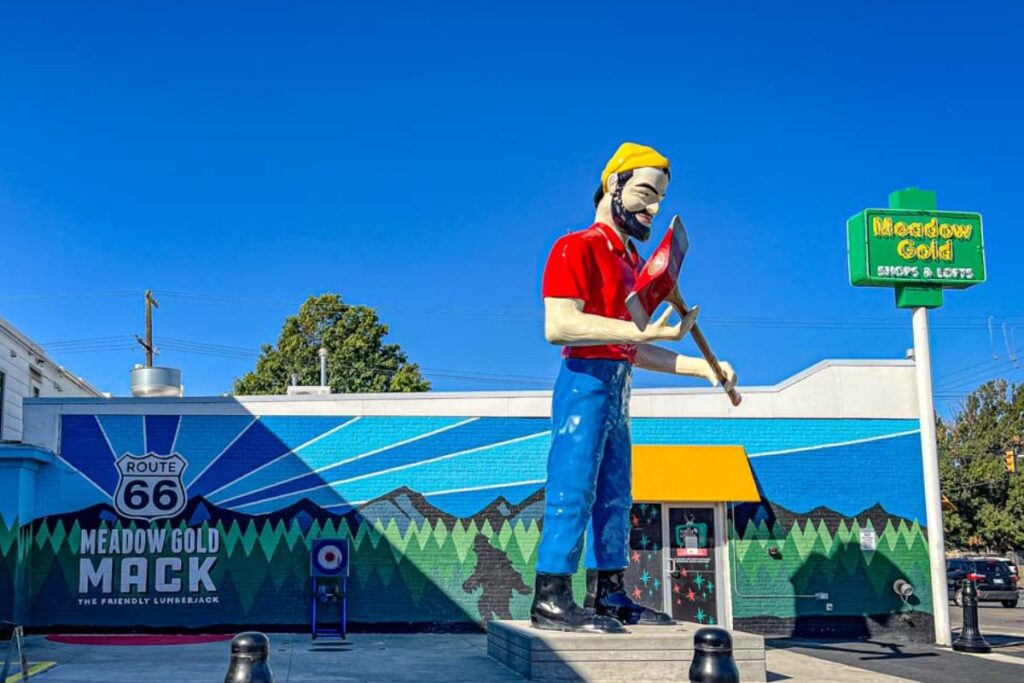
But it’s not just about preserving the past—Tulsa has embraced modernity with its Route 66 attractions as well. The city has invested in murals, interactive art installations, and restored structures that capture the spirit of the road. There’s no shortage of things to see and do as you make your way through Tulsa’s portion of Route 66.
Tourist Attractions Along Tulsa’s Route 66
One of the most delightful aspects of traveling Route 66 is discovering the quirky roadside attractions, and Tulsa is full of them. Whether you’re interested in history, art, or just a great meal, there’s something for everyone along Tulsa’s Route 66.
Buck Atom’s Cosmic Curios on 66 This quirky, larger-than-life roadside stop is a must-see for anyone traveling through Tulsa. Standing proudly in front of the store is Buck Atom, a towering “space cowboy” statue who’s become an icon of Tulsa’s Route 66 revival. The shop itself is a treasure trove of Route 66 memorabilia, local art, and kitschy souvenirs, making it the perfect spot for picking up a unique keepsake. Travelers can snap photos with Buck Atom, grab a retro-themed gift, and chat with the friendly owners who are passionate about keeping Route 66 alive.
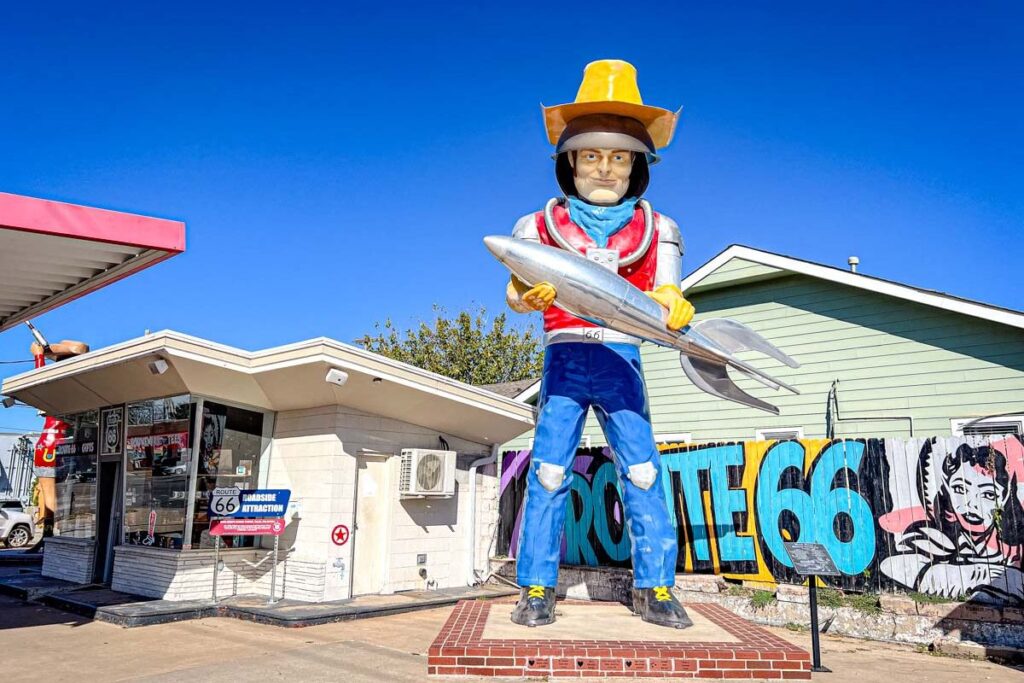
Don’t forget to grab a picture with Stella Atom, too. Grab a snack from inside then relax at one of the picnic tables before returning to your exploration of Route 66.
Mother Road Market For food lovers, Mother Road Market is an essential stop along Route 66. As Tulsa’s first food hall, it’s home to a variety of local vendors offering everything from gourmet pizza to homemade ice cream. Located right on Route 66, this vibrant food hall is a family-friendly spot with interactive art installations, retro decor, and a bustling outdoor space perfect for dining al fresco. Mother Road Market is the perfect example of Tulsa’s blend of history and modernity—a place where you can enjoy a great meal while soaking in the Route 66 vibes.

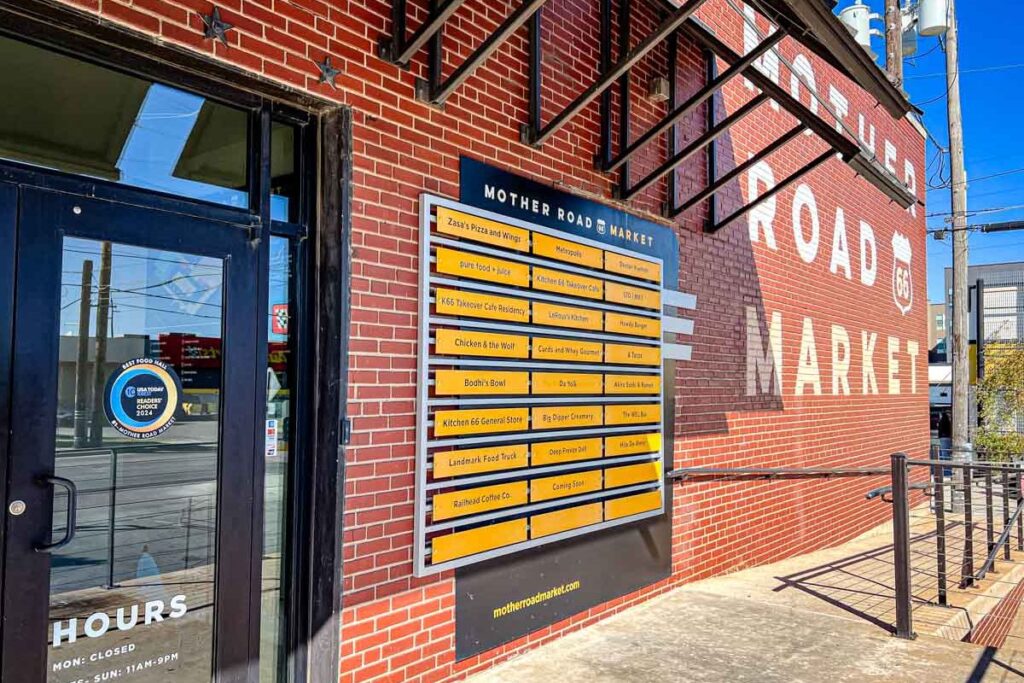
Pro tip: There’s very little on-site parking, but there’s a dedicated parking lot just down the road a bit with plenty of parking.
The Blue Dome District Named after the iconic Blue Dome building, this neighborhood was once a thriving stop for travelers needing gas or repairs. Built in the 1920s, the Blue Dome was a gas station that doubled as a hotel for motorists traveling Route 66. Today, it’s the heart of a bustling district filled with restaurants, bars, and art galleries. The Blue Dome District is a great place to experience Tulsa’s nightlife, with plenty of spots to grab a bite, enjoy live music, or take in the local art scene. It’s a perfect stop for travelers looking to experience the energy of modern Tulsa while still feeling the echoes of the past.
The Cyrus Avery Centennial Plaza A tribute to the “Father of Route 66,” the Cyrus Avery Centennial Plaza is a must-see for history enthusiasts. The plaza features a larger-than-life bronze statue of Avery, along with his family and a horse-drawn carriage, capturing the spirit of the early days of Route 66. The plaza offers stunning views of the downtown Tulsa skyline and is an excellent spot for photos, especially at sunset.
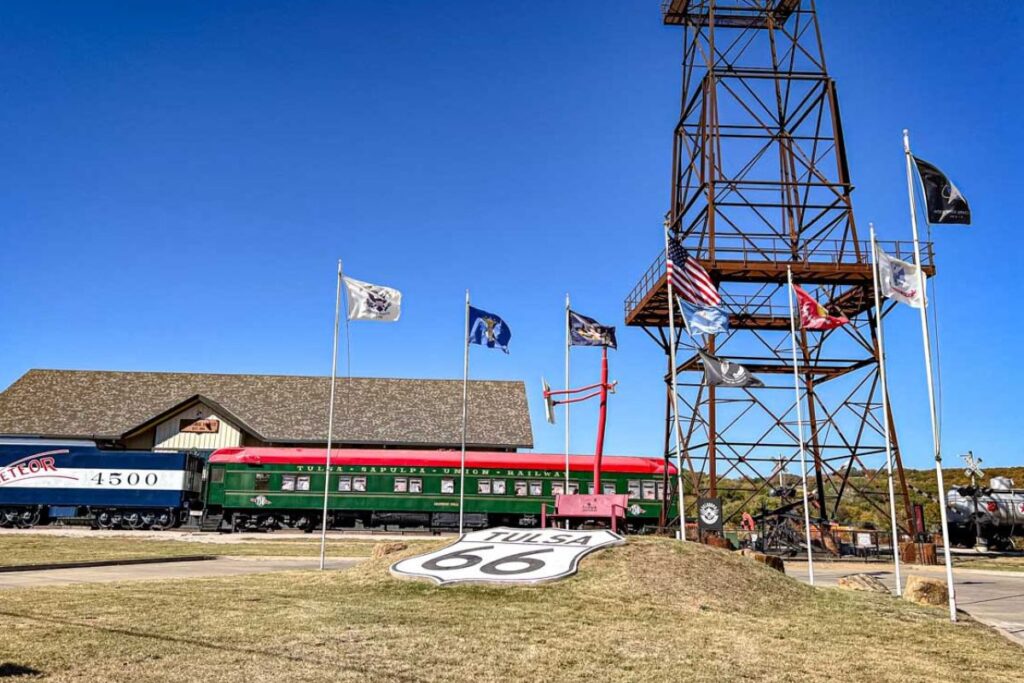
Route 66 Village For those interested in Tulsa’s industrial past, Route 66 Village is a unique outdoor museum showcasing restored vintage locomotives, an oil derrick, and artifacts from Tulsa’s days as an oil boomtown. The site gives visitors a glimpse into the role that transportation and oil played in Tulsa’s history, making it a fun and educational stop for families.
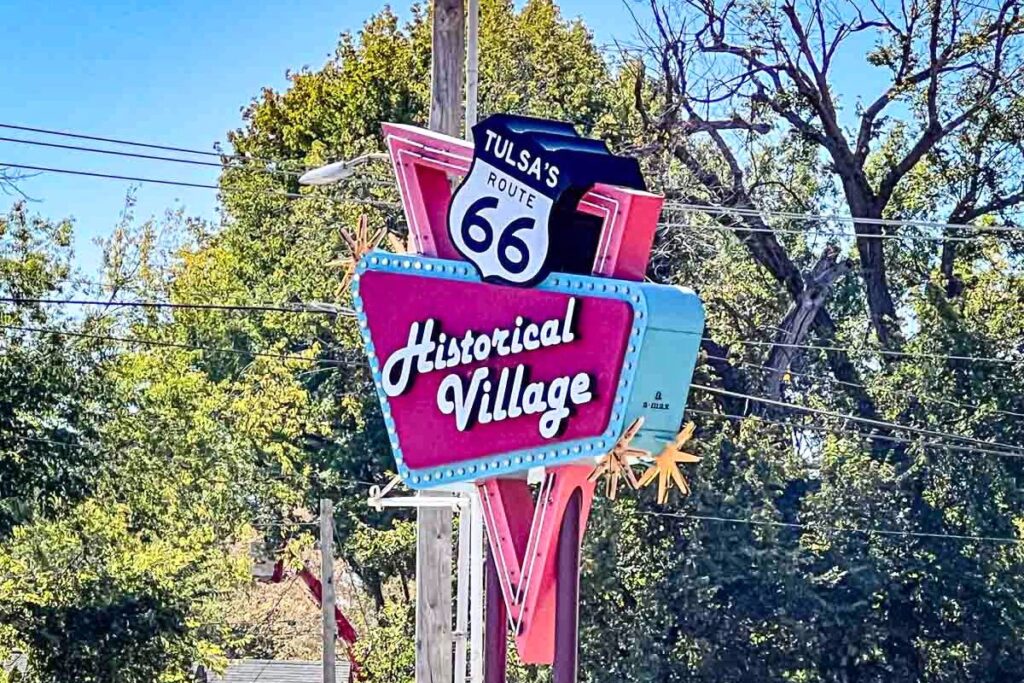
Pro tip: This stop is on the other side of the Arkansas River, so you’ll need to hop on the highway to get across the river.
Admiral Twin Drive-In One of the few remaining drive-in theaters in the U.S., the Admiral Twin Drive-In offers a nostalgic movie-watching experience right off Route 66. Opened in 1951, it’s been a favorite of locals and travelers alike for decades. There’s something magical about watching a movie under the stars, and the Admiral Twin captures that sense of nostalgia perfectly.
Ollie’s Station Restaurant For a classic Route 66 dining experience, head to Ollie’s Station Restaurant. This train-themed diner offers hearty, old-fashioned American comfort food in a whimsical setting. Model trains chug around the restaurant as you enjoy your meal, adding a fun, family-friendly vibe to the experience. It’s the perfect spot to fuel up before continuing your journey along Route 66.
The Significance of Route 66 Today
Route 66 isn’t just a road—it’s a cultural icon. For many, it represents the freedom of the open road, the adventure of exploration, and the nostalgia of simpler times. Tulsa, with its deep connection to the history of Route 66, embraces that spirit while moving forward into the future.
Tulsa’s efforts to preserve and revitalize its Route 66 attractions show how much the road still matters today. Local businesses like Buck Atom’s and Mother Road Market keep the spirit of the highway alive, drawing tourists from around the world. The mix of old and new attractions ensures that Route 66 remains relevant for future generations.
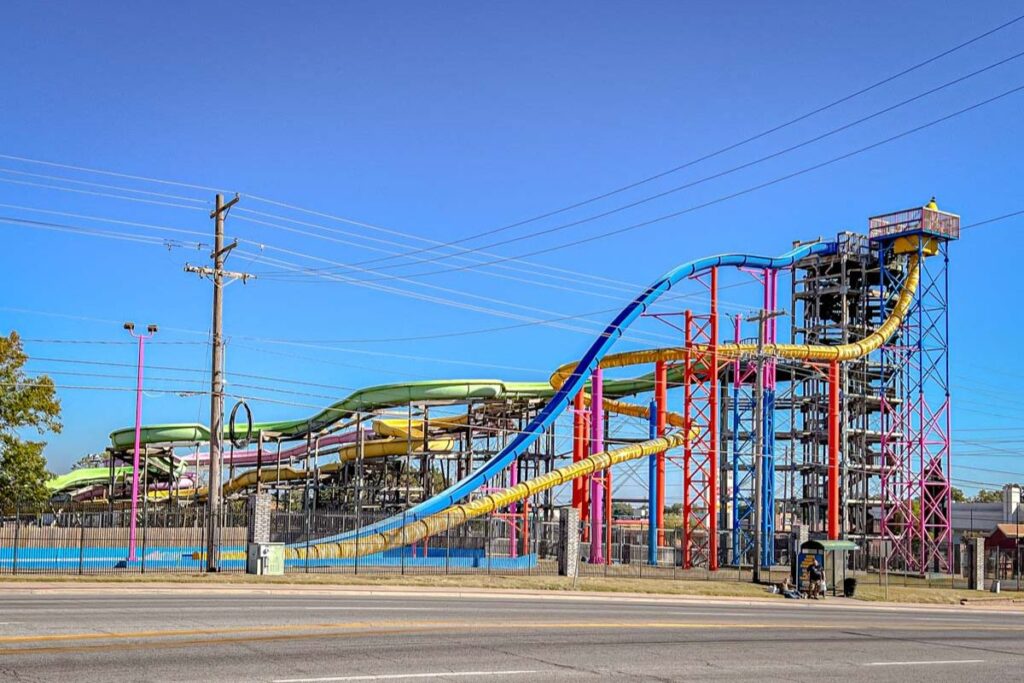
Route 66 continues to be a major draw for tourists, supporting local businesses and fueling Tulsa’s economy. Whether it’s through iconic landmarks, quirky roadside stops, or modern attractions, Tulsa’s section of Route 66 has become a cultural and economic asset to the city, attracting visitors and road-trippers looking to experience a piece of Americana.
Exploring Tulsa: More Than Just Route 66

While Route 66 is a major draw, Tulsa has much more to offer. Visitors can explore The Gathering Place, a sprawling riverside park perfect for families, or visit the Philbrook Museum of Art, which combines art with beautiful gardens. Gilcrease Museum, which houses one of the most comprehensive collections of American West art, is another cultural gem in the city.
Route 66 may lead you to Tulsa, but there’s plenty to discover beyond the highway, making it a destination worth spending time in.
Practical Tips for Road-Trippers
If you’re planning a trip along Route 66, Tulsa is best visited in the spring or fall, when the weather is mild and events are plentiful. For accommodations, consider staying in one of the boutique motels along the route or a historic hotel in downtown Tulsa.
The Final Word
Route 66 through Tulsa is a journey through time. Whether you’re stopping to marvel at historic neon signs, grabbing a bite at a classic diner, or exploring modern attractions, Tulsa offers a unique blend of nostalgia and innovation. The city’s deep connection to Route 66 makes it an essential stop for anyone tracing the historic highway. So, pack your bags, hit the road, and let Tulsa be a highlight of your Route 66 adventure.